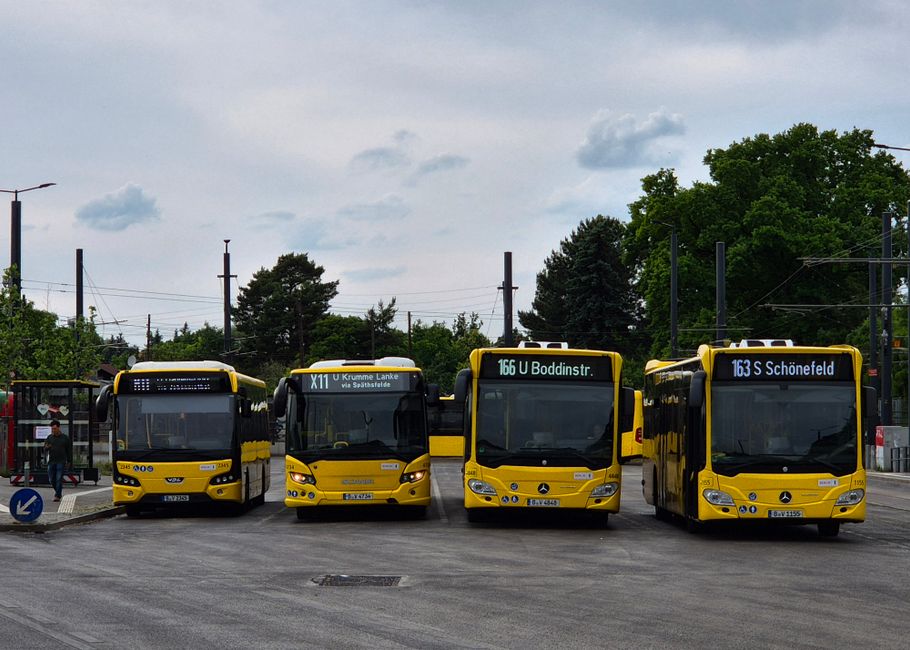
Smart Traffic Lights Ease Congestion on Key Routes

In recent years, urban centres across the United Kingdom have faced growing pressure to manage increasing traffic volumes while maintaining efficient mobility. Traditional fixed-time traffic signals, which operate on pre-set schedules, often struggle to adapt to fluctuating demand throughout the day. As a result, congestion builds up during peak hours, leading to longer journey times and higher emissions. In response, many local authorities are turning to smart traffic light systems that can adjust their timings in real time based on actual traffic conditions.
UrbanFlow Transit, a company specialising in intelligent transportation solutions, has been at the forefront of deploying such adaptive signal control technology on key routes. Their systems use sensors and data analytics to continuously monitor vehicle flow and optimise signal phases accordingly. This approach aims to provide a more responsive and efficient traffic management strategy, potentially easing congestion and improving travel reliability.
How Adaptive Traffic Signals Work
Adaptive traffic signals are a step forward from conventional fixed-time controllers. Instead of following a static timetable, these systems rely on a network of detectors—such as inductive loops, cameras, or radar sensors—that feed real-time data to a central control unit. The control unit then processes this information to determine the optimal distribution of green time across intersections. This decision-making process is based on algorithms that consider factors such as queue lengths, vehicle arrivals, and pedestrian demand.
For example, when a detector registers a long queue on one approach, the system may extend the green phase to clear the backlog, while simultaneously reducing green time on less busy approaches. The ability to make these adjustments on a cycle-by-cycle basis allows the signals to respond to abrupt changes in traffic flow, such as those caused by incidents or special events. In contrast, fixed-time signals are designed for average conditions and can quickly become inefficient when actual demand deviates.
UrbanFlow Transit has implemented this technology in several corridors, including roads with high commuter traffic and those near major retail or business districts. The company’s approach involves fine-tuning the system parameters to match local traffic patterns, ensuring that the signal timings are not only reactive but also coordinated across multiple intersections to create smooth progressions for vehicles.
Benefits Observed on Key Routes
On routes where adaptive signals have been deployed, traffic engineers have recorded measurable improvements in travel times and queue lengths. For instance, data collected from pilot projects indicates that average waiting times at intersections have decreased by up to 30% compared to previous fixed-time operations. This reduction is particularly noticeable during peak periods, where the flexibility of the system helps absorb excess demand without causing spill-back to adjacent junctions.
Moreover, the ability to synchronise signals along a corridor has the potential to create green waves, allowing vehicles to travel through multiple successive intersections without stopping. This not only reduces individual journey times but also contributes to smoother traffic flow and lower fuel consumption. Environmental benefits, such as reduced emissions, are a natural consequence of fewer stop-go cycles, though these outcomes depend on local driving behaviour and vehicle types.
It is important to note that these figures are based on specific case studies and may vary depending on the location, traffic mix, and the quality of the detection infrastructure. However, the general trend shows that adaptive systems can offer significant advantages over static timings when properly configured.
Challenges and Considerations in Deployment
Implementing adaptive traffic signalling is not without its challenges. One of the primary hurdles is the initial investment in hardware and software. Detectors, communication networks, and centralised control systems require substantial funding, and ongoing maintenance is essential to ensure accurate data collection. Local authorities must weigh these costs against the potential benefits, which may include reduced congestion-related economic losses and improved quality of life for residents.
Another consideration is the need for careful calibration and tuning. Each intersection has its own unique characteristics, such as geometric layout, pedestrian crossing patterns, and adjacent land uses. An algorithm that works well in one area may not perform as effectively in another without adjustments. Therefore, traffic engineers must conduct detailed studies and modify parameters to suit local conditions. This process requires expertise and time, and it may be an iterative process as traffic patterns evolve.
Furthermore, interoperability between different systems and vendors is an emerging issue. As cities adopt smart technologies, they often face the challenge of integrating data from various sources and ensuring that signals from different manufacturers can communicate seamlessly. Standards and protocols are being developed, but there is still work to be done to achieve fully integrated traffic management ecosystems.
Public Perception and Acceptance
The success of adaptive traffic light systems also depends on public acceptance. Drivers who are accustomed to predictable signal timings might find the seemingly random changes confusing, especially when they are unfamiliar with the logic behind the system. However, over time, as users experience reduced delays and smoother journeys, the benefits often become apparent. Communication campaigns and clear signage can help in explaining the rationale behind dynamic signal control, thereby increasing driver confidence.
Pedestrians and cyclists also interact with these systems, and their needs must be considered. Adaptive control should not compromise safety or convenience for non-motorised road users. Many systems incorporate priority for pedestrians through push buttons, but balancing this with vehicular flow is a complex task. UrbanFlow Transit addresses this by including algorithms that ensure pedestrian wait times remain within acceptable limits, based on local standards.
Data privacy is another aspect that requires attention. The sensors used in adaptive systems typically collect aggregated flow data rather than identifying individual vehicles. Nevertheless, the handling of data must comply with regulations such as the UK General Data Protection Regulation (GDPR). Clear policies regarding data retention and use are essential to maintain public trust.
Future Directions and Integration with Smart City Initiatives
Looking ahead, adaptive traffic signals are likely to become a core component of broader smart city strategies. Integration with other modes of transport, such as public transit signal priority, can further enhance network efficiency. Buses and trams may be given extended green times when they run behind schedule, improving reliability and encouraging modal shift. Similarly, emergency vehicles can be provided with pre-emption to reduce response times.
Vehicle-to-infrastructure (V2I) communication opens new possibilities. Future connected vehicles could send their planned routes and positions to traffic management centres, enabling even more predictive and proactive signal control. UrbanFlow Transit is exploring these avenues in collaboration with research institutions and local councils, recognising that the full potential of adaptive signalling will be realised as vehicle technology advances.
However, such developments must be carefully considered within the context of urban planning and sustainability goals. The deployment of smart infrastructure should align with policies that promote walking, cycling, and public transport, rather than encouraging increased car dependency. Traffic efficiency is one objective among many, and it must be balanced with environmental and social considerations.
In summary, adaptive traffic light systems offer a practical and adaptable solution to urban congestion. While they are not a silver bullet, their ability to respond to real-time conditions provides a clear improvement over conventional approaches. The experience from routes managed by UrbanFlow Transit indicates that with proper implementation and ongoing management, these systems can contribute to more efficient and less congested networks.